Saturday, January 6, 2018

Hands On With Google’s Pixel 2 XL: More Pixels, More Google

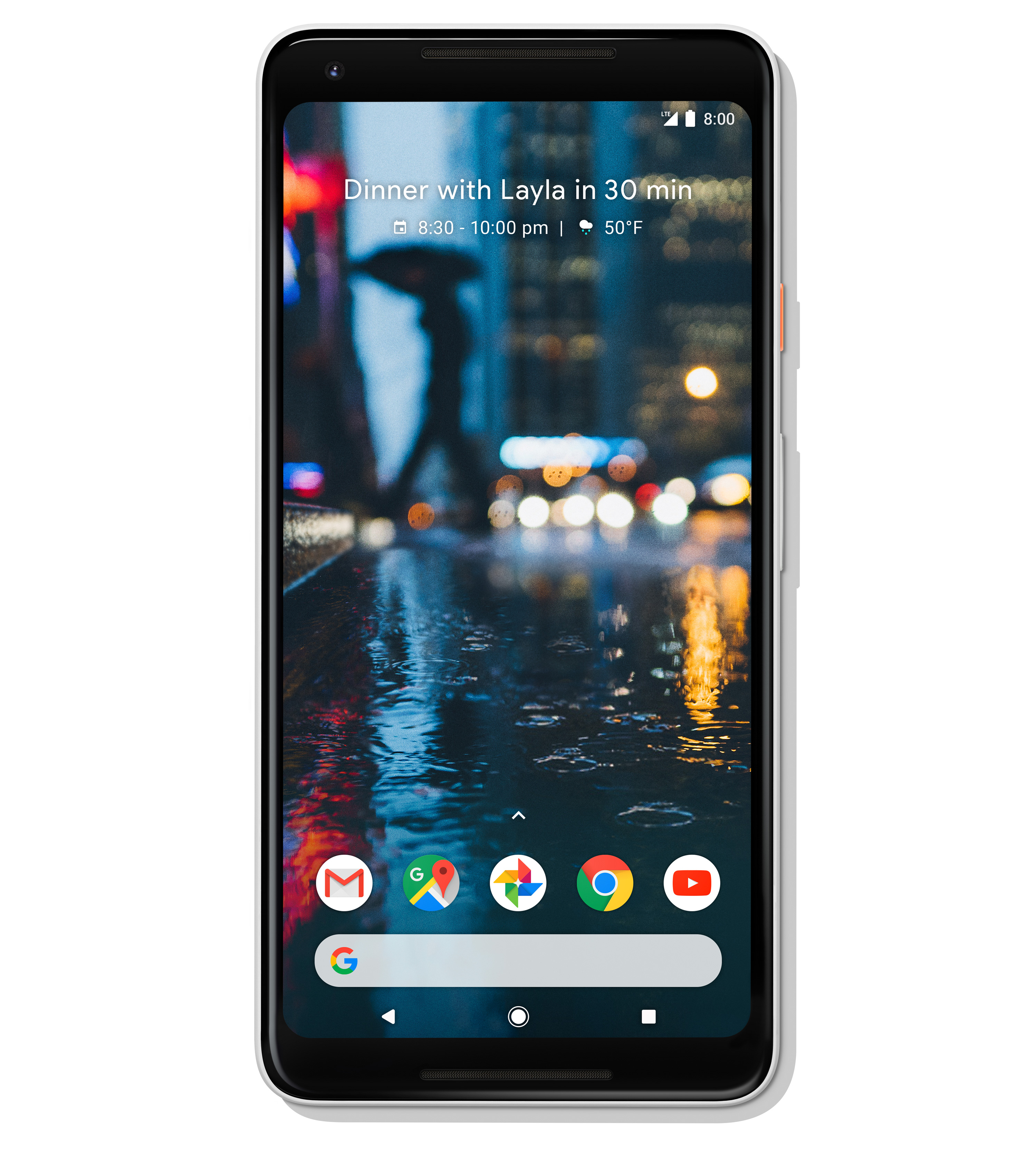
This morning at a press event in San Francisco, Google held the second of what has now become an annual hardware event for the company, their Made by Google event. As with last year’s show, this year’s presentation showcased a mix of different devices and accessories from Google. However the most anticipated device for enthusiasts across the spectrum was without a doubt the next Google Pixel phones, which as expected made their introduction today as the Google Pixel 2 and Pixel 2 XL.
Last year’s introduction of the Pixel phone family was a significant departure from tradition for Google. The company retired the Nexus lineup of aggressively priced mid-range/high-end phones in favor of what is best called Google’s take on what a flagship Android phone should be. The Pixels had cutting-edge specifications and features; they also had a flagship price. Depending on who you ask and what statistics you use, it can be argued just how much of the Android handset market that the Pixel phones actually captured – a situation not helped by the Pixel phones being so hard to get for a while – however what can’t be argued is that it had a definite impact on the expectations of the Android phone market.
With the original Pixel phones, Google and its manufacturing partner HTC created a solid phone that was perhaps a bit derivative in design, but none the less had a unique aesthetic to it that helped to separate it from other flagship phones. The Pixel 2 phones, in turn, do not significantly rock the boat here. Instead they come off as a natural evolution of the original pixel phones.
Google Pixel Phones (2017)
Google Pixel 2Google Pixel 2 XLGoogle PixelGoogle Pixel XL
SoCQualcomm Snapdragon 835

4x Kryo 280 Performance @ 2.35GHz
4x Kryo 280 Efficiency @ 1.90GHz
Adreno 540
Qualcomm Snapdragon 821

2x Kryo @ 2.15GHz
2x Kryo @ 1.59GHz
Adreno 530 @ 624MHz
Display5.0-inch 1920x1080 AMOLED
95% DCI-P3
6.0-inch 2880x1440 pOLED
100% DCI-P3
5.0-inch 1920x1080 AMOLED5.5-inch 2560x1440 AMOLED
Dimensions145.7 x 69.7 x 7.8 mm, 143g157.9 x 76.7 x 7.9 mm, 175g143.8 x 69.5 x 7.3-8.5 mm154.7 x 75.7 x 7.3-8.5 mm
RAM4GB LPDDR4x4GB LPDDR4
NAND64GB / 128GB (UFS 2.0?)32GB / 128GB (UFS 2.0)
Battery2700 mAh
non-replaceable
3520 mAh
non-replaceable
2770 mAh
non-replaceable
3450 mAh (13.28 Wh)
non-replaceable
Front Camera8MP, 1.4µm pixels, f/2.48MP, 1/3.2" Sony IMX179 Exmor R, 1.4µm pixels, f/2.4
Rear Camera12.2MP, 1.4µm pixels, f/1.8, PDAF + Laser AF, HDR+, dual LED flash, OIS12.3MP, 1/2.3" Sony IMX378 Exmor RS, 1.55µm pixels, f/2.0, PDAF + Laser AF, HDR+, dual LED flash
ModemQualcomm X16 LTE (Integrated)
2G / 3G / 4G LTE (Category 16/13)
Qualcomm X12 LTE (Integrated)
2G / 3G / 4G LTE (Category 12)
SIM SizeNanoSIM + eSIMNanoSIM
Wireless802.11a/b/g/n/ac 2x2 MU-MIMO, BT 5.0, NFC, GPS/GNSS802.11a/b/g/n/ac 2x2 MU-MIMO, BT 4.2, NFC, GPS/GNSS
ConnectivityUSB 3.0 Type-CUSB 3.0 Type-C, 3.5mm headset
Launch OSAndroid 8.0Android 7.1
Launch Price$649 / $749
64GB / 128GB
$849 / $949
64GB / 128GB
$649 / $749
32GB / 128GB
$769 / $869
32GB / 128GB
Under the hood, you’ll find all the bells and whistles you’d come to expect from a flagship smartphone in 2017. Google is using Qualcomm’s Snapdragon 835 SoC, which is paired with 4GB of LPDDR4x RAM. As with the first-generation Pixel phones, outside of screen resolution and battery size, both phones share the same internals; so we’re looking at the same storage, RAM, SoC, camera modules, etc. In other words, the Pixel 2 XL really is a larger version of the Pixel 2, rather than a technically superior version.
That said, even within the limited confines of display and battery size changes, the phones do stand apart. The Pixel 2 retains its predecessor’s 5-inch 1080p AMOLED display. I didn’t get hands-on time with this phone, but I expect that it will have the same Pentile arrangement as its predecessor as well. Meanwhile the Pixel 2 XL gets a new, larger screen; instead of a 5.5-inch 1440p AMOLED, it’s now rocking a 6-inch 2880x1440 pOLED (Plastic OLED) display. Google is not discussing who is providing the pOLED display, but given LG’s recent actions in this space, I suspect they are the supplier. Regardless, the pOLED display does end up being a bit better than the Pixel 2’s display, offering 100% DCI-P3 coverage rather than 95%.
Meanwhile new to the Pixel phone family, both phones now have always-on screens courtesy of their OLED displays. Google calls both of the OLED displays vivid, and that’s certainly the case for the Pixel 2 XL I got to spend some time with. Android’s color space management limitations are well-known, and I am eager to see if Google has done something to improve the situation on their own phones.
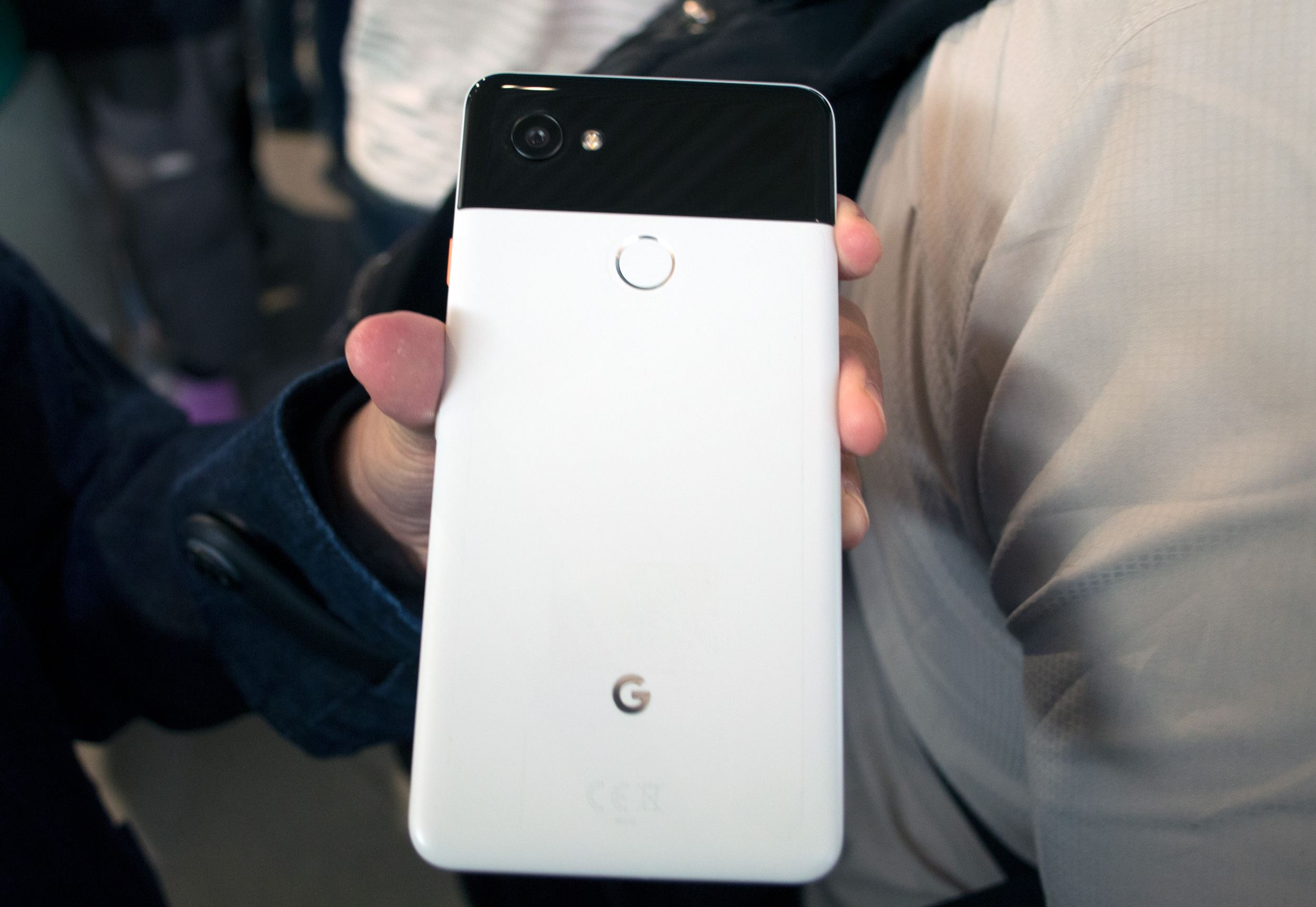
On the literal flipside of the cameras is the Pixel 2 family’s 12.2MP camera. In terms of resolution this is very similar to last year’s phones, but this is clearly a new sensor. The pixel size is smaller, at 1.4um versus 1.55um, and the aperture is now f/1.8. Perhaps the single biggest technical change here is that after not including Optical Image Stabilization (OIS) in last year’s phones, the Pixel 2s now get OIS, and OIS can be used alongside EIS, which Google calls Fused Video Stabilization.
In terms of overall quality, one of the big focal points of the original Pixel phones was to have the highest quality smartphone camera on the market. And while the Pixel has since been surpassed, Google is continuing to pursue that direction with the Pixel 2. While DxOMark is not the sole arbitrator of camera quality, the record-setting score of 98 means that the Pixel 2 phones should be very competitive in the market, and that the Pixel 2 will be worth keeping an eye on.
Speaking of cameras, Google has also added some computational photography features to the phones via a portrait mode. This is a particularly interesting development since the phones still only contain a single rear-facing camera. So Google is doing the necessary depth mapping without the benefit of a second camera and the parallax effect to isolate the foreground from the background. Google has been a major player in the computer vision space, and I’m very interested in seeing how well their tech works in practice, as Google is definitely taking the hard way towards portrait mode by going this route. On the plus side, because they don’t need two cameras, the front-facing camera can be used for portrait mode as well.
Moving on, in terms of build quality, Google has taken a step up with the Pixel 2 phones. Both phones are now IP67 water and dust resistant, the latter in particular being a major improvement over the original Pixel’s much more limited IP53 resistance. Google’s one of the last flagship vendors to add this level of water resistance, but none the less it’s a welcome development.
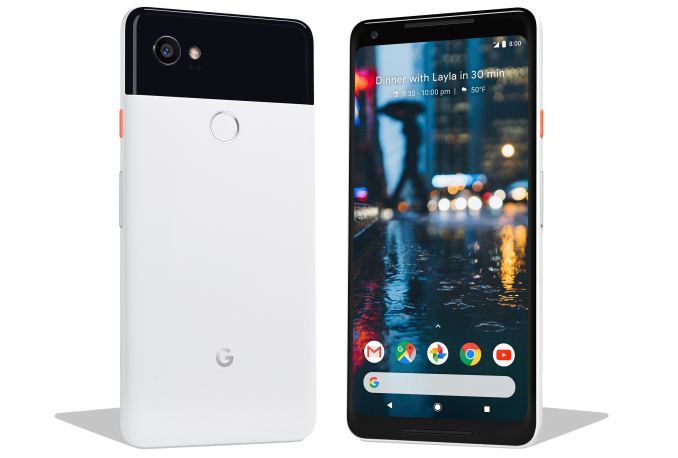
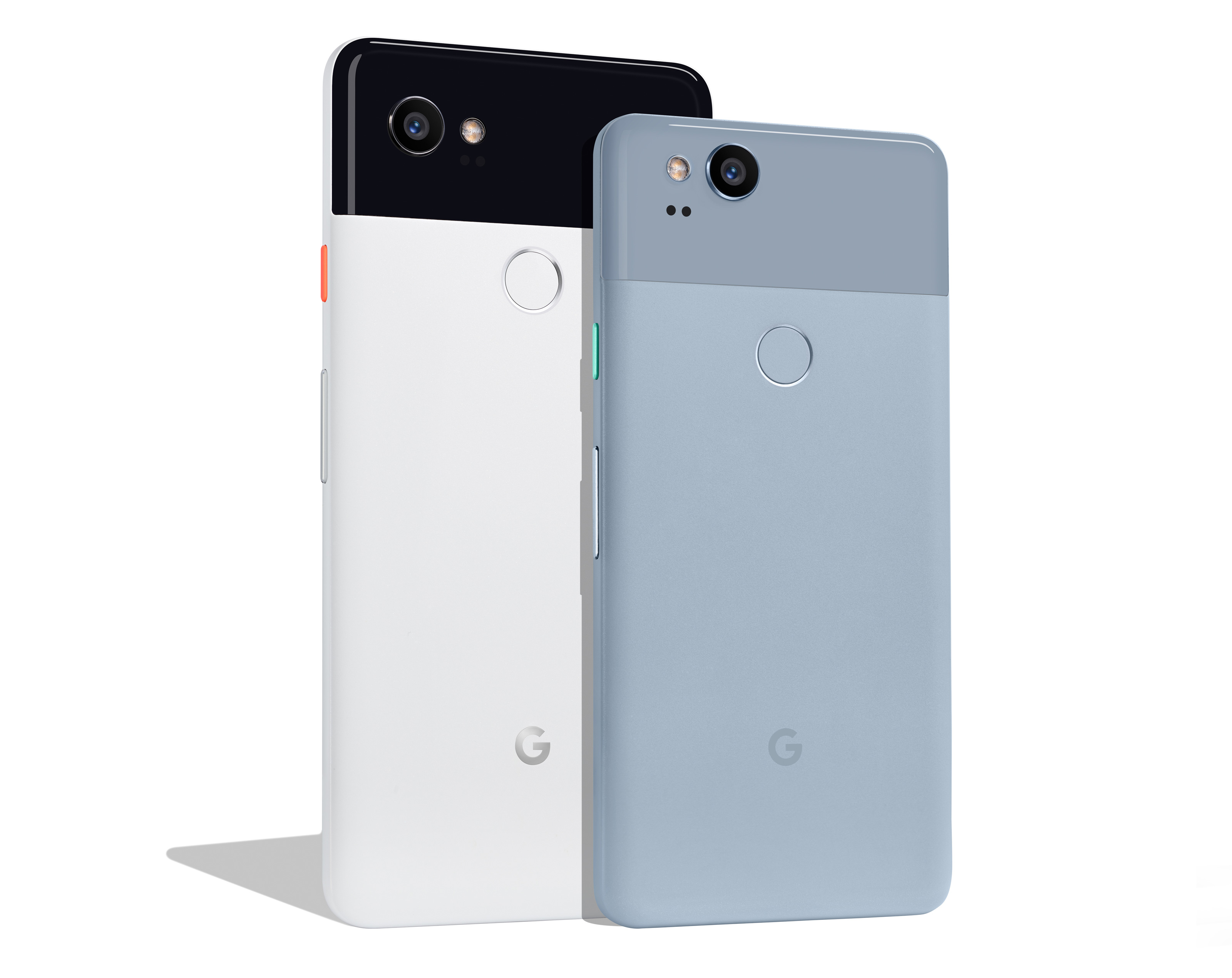
Overall the phones are just a bit larger than their original counterparts. The Pixel 2 is a couple of mm taller and wider, and the same goes for the Pixel 2 XL as well, despite the taller 18:9 aspect ratio display. Also, after avoiding a camera hump on the original Pixels, there is now one present on the Pixel 2s (almost certainly a result of including OIS).

Otherwise the aluminum body feels very similar to the original phones. In fact at just about every level, the Pixel 2 phones feel like the original Pixel. The 2 is not a radical design departure – nor does it need to be – so the whole thing feels very similar in-hand. If you were comfortable with a Pixel, you’ll likely be comfortable with a Pixel 2.
Which isn’t to say that Google’s phone hasn’t learned some new tricks. Taking a page from HTC’s playbook (who I’m assuming is building the phone again), Google has added squeezing as an input action to the phone. Google calls this Active Edge, and it can be configured to invoke various actions. The default action, fittingly enough, activates Google Assistant, giving Google a dedicated non-voice action for Assistant without adding a button. Active Edge will even work with cases, including Google’s new Pixel 2 cases.
Speaking of Google assistant, unsurprisingly, software is a big part of Google’s pitch with the Pixel 2 family. In fact the company was rather candid in their keynote that with the gradual slowing of Moore’s Law and general hardware development, they can’t release a radically different phone every single year. As a result the company has embarked on what they’re calling a Hardware + Software + AI focus for their products. This embodies the above hardware, numerous features offered by Google Assistant – including a suite of features coming over from or integrating with Google Home – and then the rest of the pure Android 8.0 Oreo software stack. Pixel users will also be getting a preview release of Google's Lens functionality later this year. Broadly speaking, Google is following a similar trend as other handset manufactures, moving from competing just on specifications to making a complete ecosystem/lifestyle play.
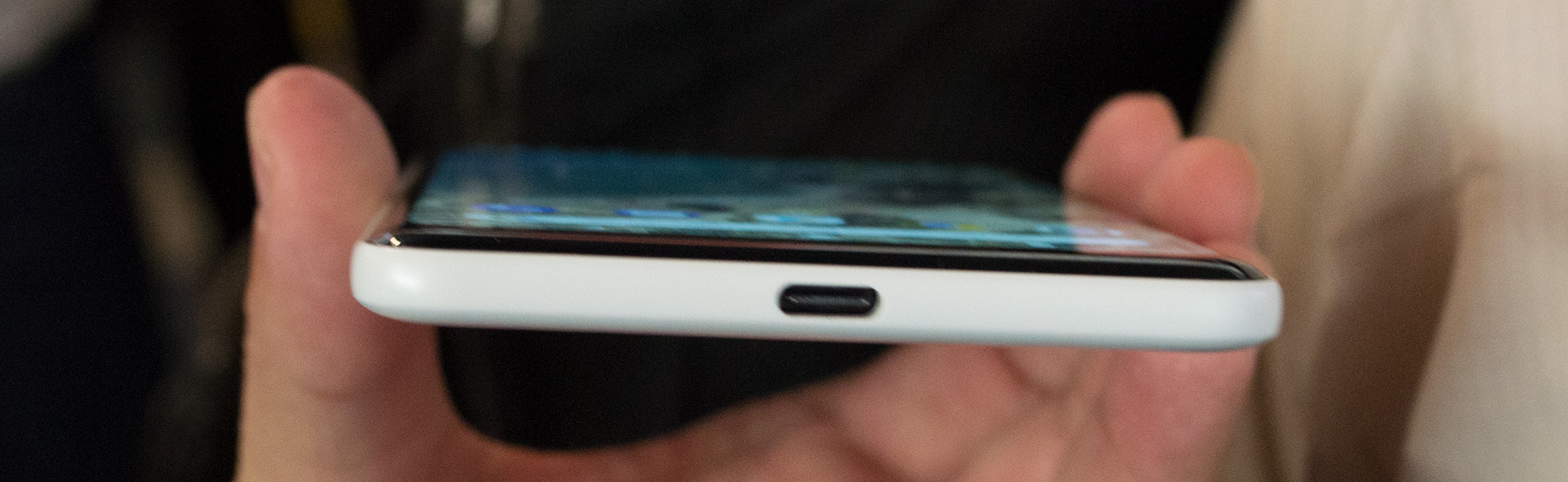
Otherwise, despite an overall strong hardware configuration, hardware enthusiasts will likely come away disappointed with one thing: the loss of the 3.5mm audio jack. Google has removed the audio jack for the Pixel 2, similar to so many other phones in the last year. Instead users will need to use an adapter, USB-C headphones, or Bluetooth headphones. No doubt removing the jack helps with that IP67 waterproofing, but officially Google hasn’t said why the jack has been removed.
Rounding out the experience, like the original Pixel, Verizon is once again Google’s exclusive carrier launch partner in the US, meaning they are the only carrier selling the phone. However as this is a global launch, Google is actually selling both Verizon and unlocked versions of the phones. So buyers will have the option of going to other carriers, with a bit more effort.
Finally, the Pixel 2 phones will begin shipping on October 17th, with pre-orders starting immediately. The Pixel 2 is being priced at $649 for a 64GB model, while the Pixel 2 XL will go for $849 for the same capacity. For another $100, both phones can be upgraded to 128GB of storage.

Hands On With the Samsung Galaxy Note8: Think Big

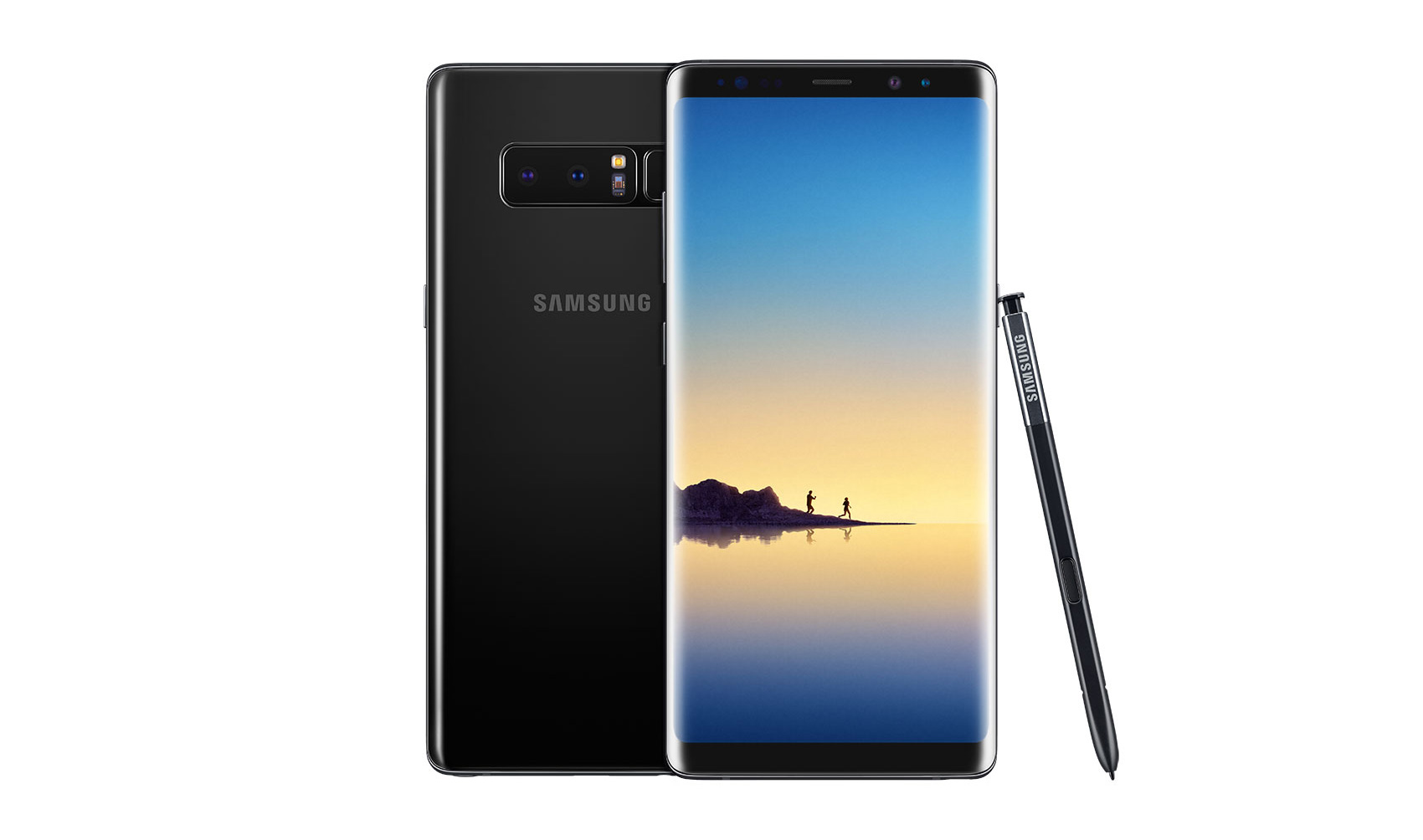
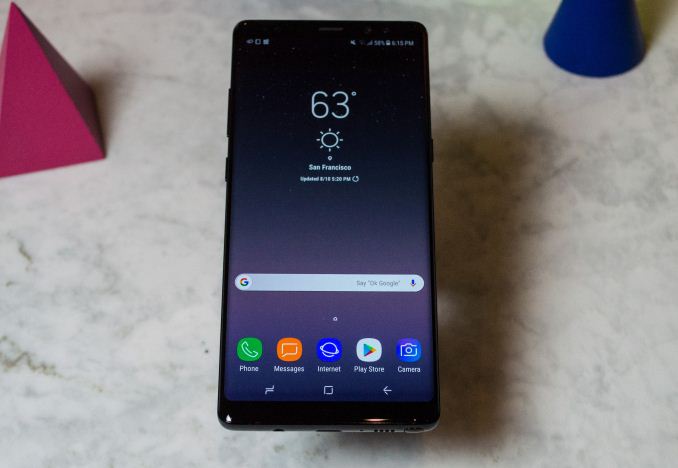
At the aptly named Unpacked event, this morning Samsung is taking the wraps off of their next generation phablet, the Galaxy Note8. A staple of summer handset launches, the Note has become the third pillar of Samsung’s flagship Galaxy device lineup, and for various reasons – good and bad – is perhaps the most memorable and unique member of the Galaxy family. While other Android handset vendors can give Samsung a run for their money in the smartphone space, Samsung has carved out and held on to the very distinct niche of the modern, stylus-equipped phablet.
Over the years the company has continued to refine their flagship phones and phablets, and in the last couple of years in particular this has culminated in the Galaxy Note becoming the de-facto third member of the Galaxy S family. While it shows up a few months later than its original, stylus-free counterparts, it has increasingly followed the basic design cues of the Galaxy S family, not to mention the underlying hardware platform. The Galaxy Note8, in turn, is no different. As we’ve seen in our hands-on, it’s more than just a Galaxy S8 with a stylus, but that’s certainly where Samsung started, and the single best frame of reference for understanding the device.
So what sets the Note8 apart from the Galaxy S series, and arguably makes it the flagship of all Samsung phones? Phablet size and the traditional Galaxy Note stylus & software aside, the marquee feature for this generation of the Note is the camera system. Samsung has taken the already very capable Galaxy S8’s camera system and doubled down, making the jump to a dual camera system. Samsung is far from the first vendor to do this – for better or worse, dual cameras in some form have become a checkbox feature for 2017 – however in lieu of being first they’re looking to be the best. And that means equipping the phone with full-featured, high quality camera modules for both the standard telephoto and new wide-angle cameras.
Samsung Galaxy Family
Samsung Galaxy Note8Samsung Galaxy S8+Samsung Galaxy Note7
SoCQualcomm Snapdragon 835 (US, China, Japan)
4x Kryo 280 Performance @ 2.35GHz
4x Kryo 280 Efficiency @ 1.90GHz
Adreno 540

Samsung Exynos 8895 (Rest of World)
4x Exynos M2 @ 2.30GHz
4x Cortex-A53 @ 1.70GHz
ARM Mali-G71
Snapdragon 820 (US)
2x Kryo @ 2.15GHz
2x Kryo @ 1.6GHz
Adreno 530

Exynos 8890 (ROW)
4x Exynos M1 @ 2.3GHz
4x Cortex A53 @ 1.6GHz
ARM Mali T880MP12
Display6.3-inch 2960x1440 (18.5:9)
SAMOLED (curved edges)
6.2-inch 2960x1440 (18.5:9)
SAMOLED (curved edges)
5.7-inch 2560x1440
(16:9)
SAMOLED Dual Edge
Dimensions162.5 x 74.8 x 8.6 mm
195g
159.5 x 73.4 x 8.1 mm
173g
153.5 x 73.9 x 7.9mm
169g
RAM6GB LPDDR44GB LPDDR44GB LPDDR4
NAND64GB (UFS)
+ microSD
Battery3300 mAh
non-replaceable
3500 mAh (13.48 Wh)
non-replaceable
3500 mAh (13.48 Wh)
non-replaceable
Front Camera8MP, f/1.75MP, f/1.7, 1.12µm
Rear CamerasWide-Angle: 12MP, f/1.7, dual-pixel PDAF, OIS, auto HDR, LED flash12MP, 1.4µm pixels, f/1.7, dual-pixel PDAF, OIS, auto HDR, LED flash12MP Rear Facing w/ OIS, f/1.7, 1.4µm, 1/2.6"
Telephoto: 12MP, f/2.4, OIS
ModemSnapdragon X16 LTE (Integrated)
2G / 3G / 4G LTE (Category 16/13)

Samsung LTE (Integrated)
2G / 3G / 4G LTE (Category 16/13)
2G / 3G / 4G LTE (Category 12/10/9 LTE)
Region Dependent
SIM SizeNanoSIM
Wireless802.11a/b/g/n/ac 2x2 MU-MIMO, BT 5.0 LE, NFC, GPS/Glonass/Galileo/BDS
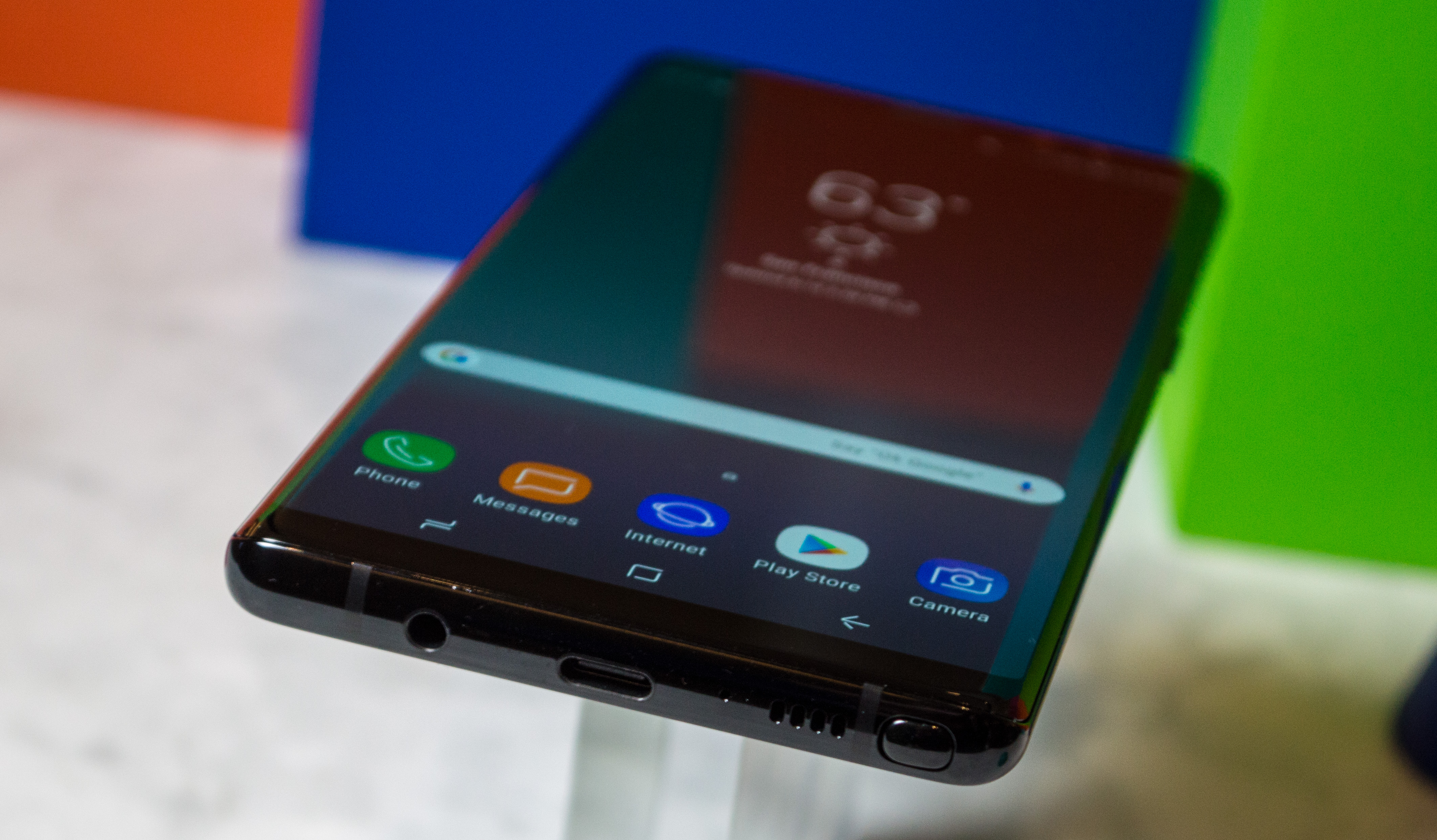
ConnectivityUSB Type-C, 3.5mm headset
Featuresfingerprint sensor, heart-rate sensor, iris scanner, face unlock, fast charging (Qualcomm QC 2.0 or Adaptive Fast Charging), wireless charging (WPC & PMA), IP68, Mobile HDR Premium
Launch OSAndroid 7.1.1 w/ TouchWizAndroid 7.0 w/ TouchWizAndroid 6 w/ TouchWiz
But before we get too deep down the camera hole, let’s take a look at the basic specifications of the phone. As has become tradition for Samsung, the basic hardware of the Galaxy Note8 is practically lifted from this year’s Galaxy S8 series. This means that North America and some other CMDA territories will be receiving phablets powered by Qualcomm’s Snapdragon 835, and the rest of the world will be receiving phones based on Samsung’s own Exynos 8895. Both models, are in turn paired with 6GB of LPDDR4 RAM, 2GB more than the Galaxy S8 phones.
Interestingly, the stars have aligned such that both SoCs are being fabbed by Samsung on their 10nm LPE process, and even under the hood the SoCs aren’t too dissimilar, employing an octa-core setup with 4 high-performance cores and another 4 high-efficiency cores. Though for our readers in territories receiving the SD835 version, you’re likely in luck – our extensive testing on the two SoCs last month found that while both SoCs are quite capable, the Snapdragon 835 is the faster of the two – a pattern I’d expect to hold with the Galaxy Note8.
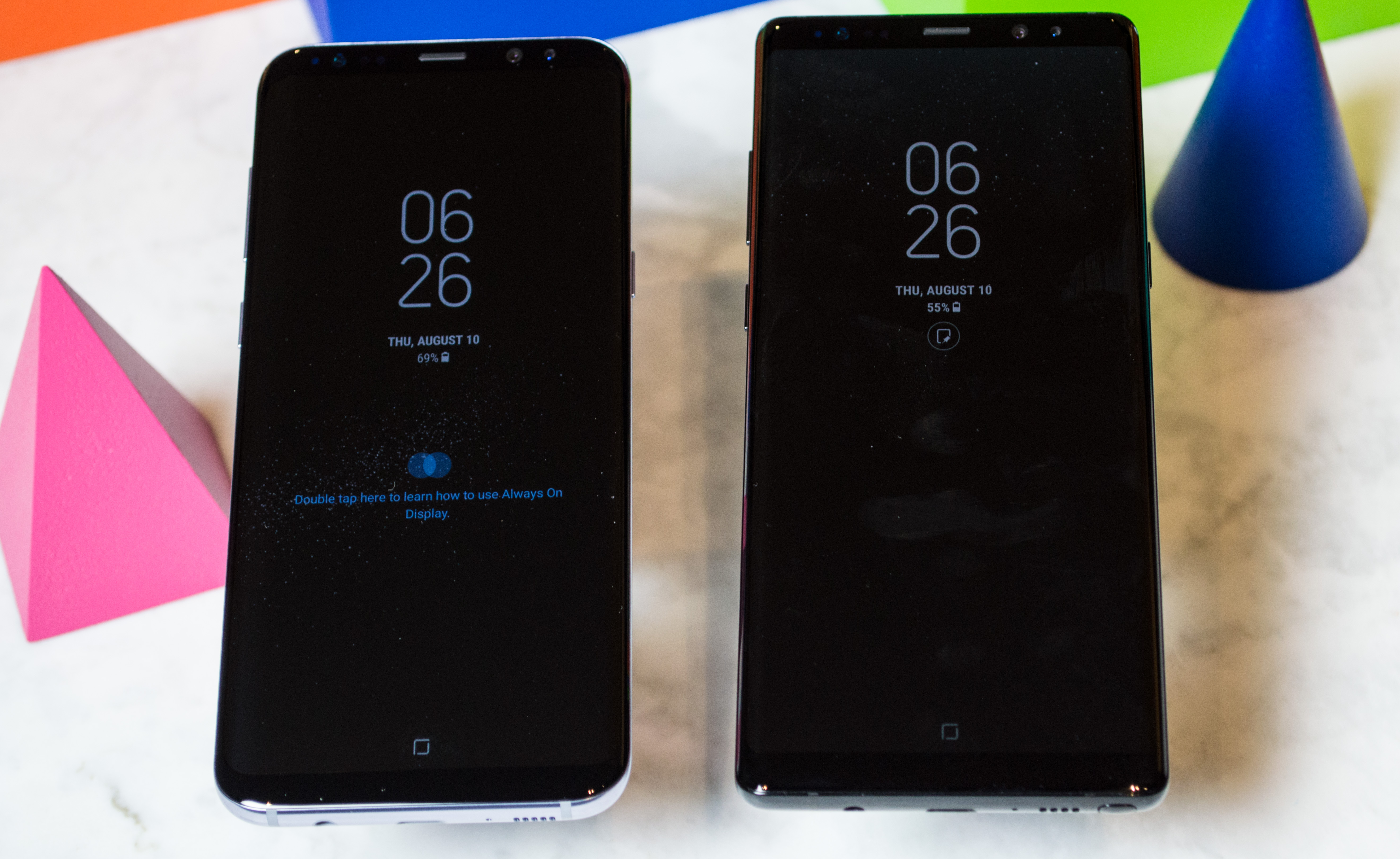
Samsung’s flagship phablet also inherits the S8’s SAMOLED Infinity display, however its size and shape have been altered to fit the needs of the Note8’s body. For their latest phone Samsung is enlarging their screen yet again; whereas the Note7 shipped with a 5.7-inch display and the Galaxy S8+ with a 6.2-inch display, the Note8 pushes that to 6.3-inches, making this Samsung’s largest phone display to date. In terms of specifications, the display is functionally identical to the S8+, utilizing a wider-than-usual 2960x1440 (Quad HD+) PenTile SAMOLED display. Making full use of the flexibility of OLED panels, Samsung has also retained their Infinity curvature. However unlike the S8 phones, Samsung has squared off the Note8 to maximize the amount of writing surface; the display is now flat to the edge of the phone, where it then more sharply curves to the sides, rather than having the S8’s gradual curve over more of the phone. In some respects it’s closer to the older Dual Edge design than it is the Infinity design.
The net effect of this change is that the Note8 holds more like a larger Note7 than it does an S8+, a fitting choice given the use of a stylus. In my brief time with the phone, I found that it feels easier to hold than the S8+, though this is of course highly variable with hand size and what you’re used to as far as phone designs go. Otherwise, the full dimensions of the phone mirror the larger screen, making this Samsung’s largest phone yet, measuring 162.5 x 74.8 x 8.6 mm, quite a bit taller, a smidge wider, and definitely thicker than either the previous Note7 or the S8+.
Samsung of course was rather aggressive on size for the Galaxy Note7, and a lack of space for the high capacity battery was a contributing factor in the battery issues that ultimately lead to the recall of that device. Exploding phone jokes aside, this brings up a serious point for Samsung, which is how they recover from the Note7 fiasco. Arguably the first part of that process was successfully rolling out the Galaxy S8 family, to show the public that they haven’t lost their touch overall. However as the successor to the Note7, the launch of the Note8 brings the subject back to the forefront of the public mind, and what Samsung is doing to make sure the Galaxy Note8 doesn’t go out with a bang.
The biggest change here is the sheer amount of validation the phone has gone through. Instituted earlier this year – and being carried through with the Note8 – is Samsung’s “8-point Battery Safe Check” process, to validate the design and manufacturing of the Note8’s battery. Equally (if not more) significant is that rather than go it alone, Samsung has retained the services of UL – whom helped with the original Note7 root cause analysis – to check and certify the Note8 battery design.
Even then, in terms of total battery capacity, the Note8 is smaller than both the Note7 and the S8+. Both of those phones shipped with a 3500 mAh battery, whereas the Note8 uses a slightly smaller 3300 mAh battery, despite the phone’s overall larger size. Ultimately only time can judge how well Samsung has done here, but the company does not seem to be taking any chances. The one silver lining for the company is that despite their missteps with the Note7, consumer adoption of competing stylus-equipped phablets has been tepid, so while the Note7’s problems cost Samsung a lot of money in the short-term, in the long-run it looks like Samsung is in position to retain their control of the market.
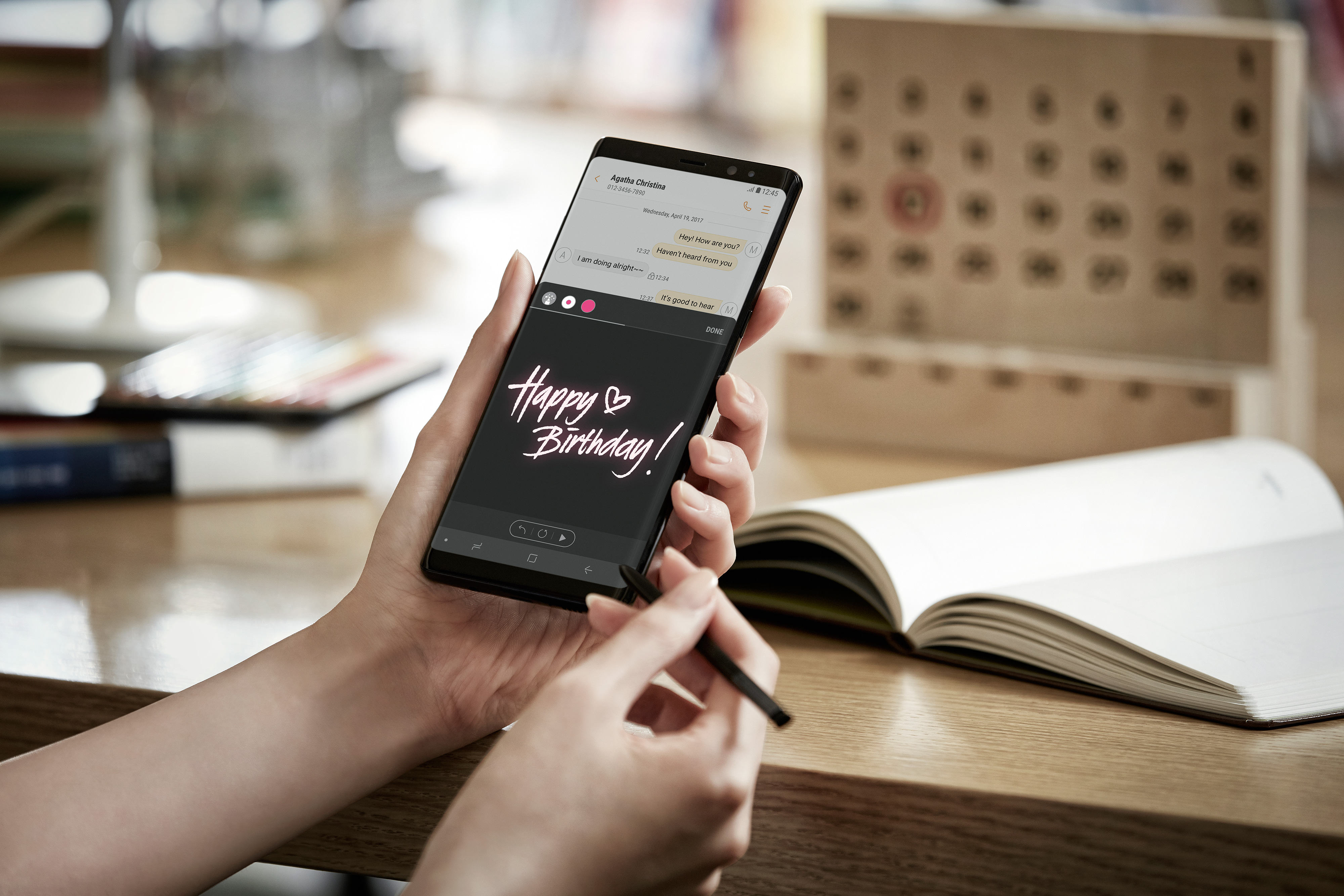
Moving on, let’s talk about the Note8’s defining feature: the S-Pen stylus. For the Note8 the company hasn’t radically altered the stylus or its functionality – retaining the 0.7mm tip and 4096 levels of pressure sensitivity – however there have been some small changes. Overall the pressure sensitivity curve of the phablet and stylus duo has been altered to increase their sensitivity, as Samsung is going for what they’re calling a “more natural” writing experience. Otherwise Samsung has also retained the complete IP68 water proofing for the phone and stylus, including when the stylus is removed.
For the Note8 the company is rolling out some new software features to take advantage of the stylus. Of particular note (ed: no pun intended), the company is rolling out a new feature they call Live Message, which is an add-on for chat applications that lets a user write out a message with the stylus, and then have it sent as an animated GIF so that the recipient can see the (delayed) drawing process in action. Samsung has also tweaked the Note’s longstanding screen off memo feature, increasing the number of memo pages to 100, while there’s also better integration between the stylus and the phone’s language translation features.
Overall the stylus remains the single most important feature of the Note series, however for the S8/Note8 generation in particular, Samsung’s camera choice will give the stylus a run for its money. As I mentioned earlier, the Note8 is the first high-end Samsung phone to ship with dual rear cameras, following the same general trend as other smartphone vendors over this generation. However unlike much of Samsung’s competition, the company is looking to one-up the early adopters by doing dual cameras better than anyone else, including Apple.
To do that, the company is doubling down on the already impressive 12MP Galaxy S8 camera by giving the Note8 a pair of those camera. The first camera is the traditional wide-angle camera, and features the same 12MP, f/1.7 dual-pixel PDAF with OIS camera as the Galaxy S8. Meanwhile the second camera gets a telephoto lens with an effective 2x magnification, while the underlying hardware is slightly different. The sensor is still 12MP and loses the dual-pixel PDAF, however it does retain OIS. This latter point is particularly interesting, as even front-runner Apple didn’t put OIS on the iPhone 7 Plus’s telephoto camera, giving Samsung a technical leg-up over their nearest competitor.
The difference is that this makes it possible to apply not only electronic image stabilization, but optical stabilization as well to anything captured with the telephoto camera, be it a zoom shot of a subject or a shot exploiting depth-of-field effects. The company even had a demo setup to show the difference, and while the scenario was without a doubt contrived – with phones mounted to a box specifically set to continually shake them – the effect was none the less impressive. For the unsteady-handed, OIS is often the savior of photos, so having OIS on both cameras has its advantages, especially as the optical zoom of the telephoto lens exacerbates any movements.
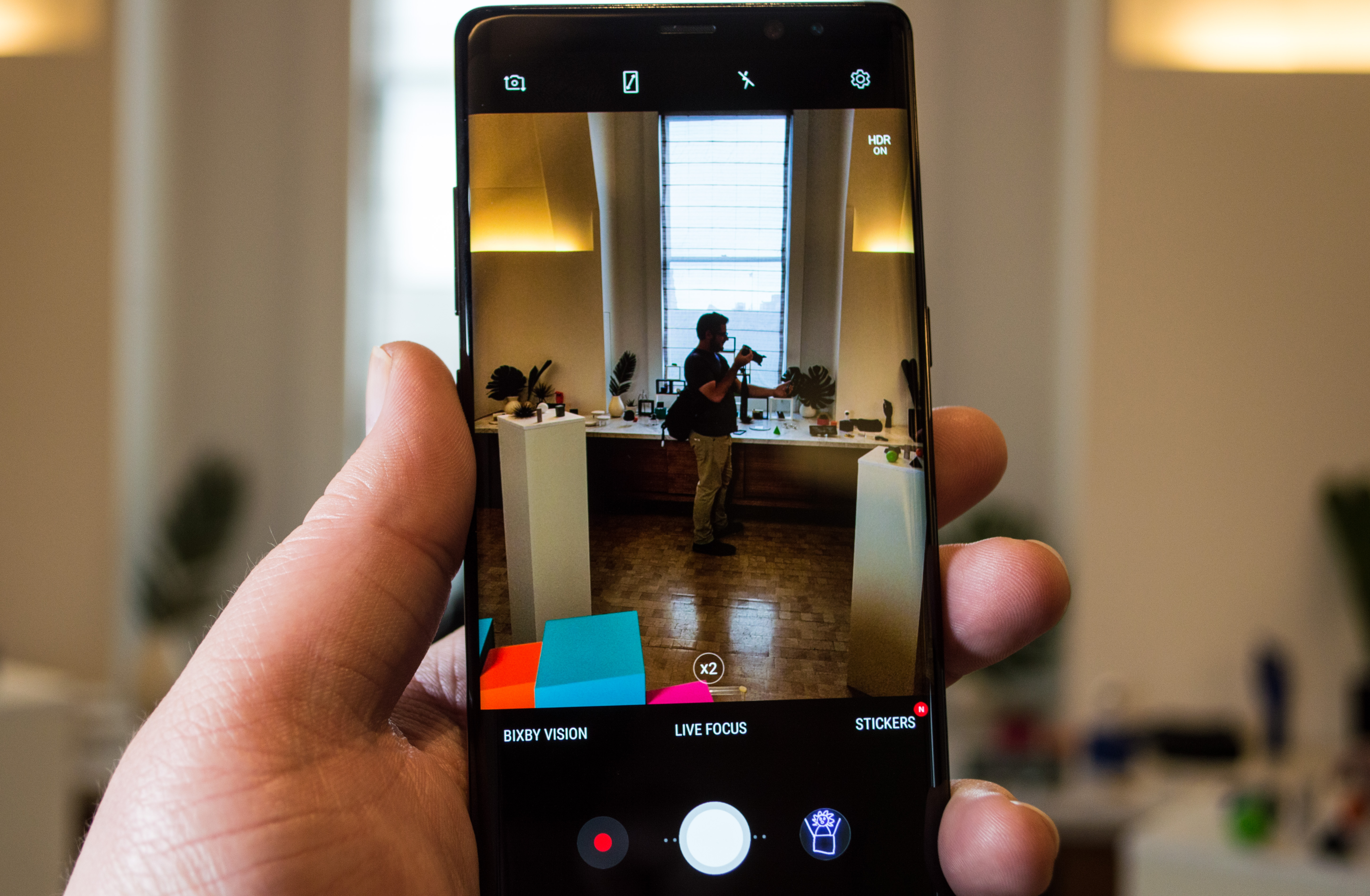
Otherwise, Samsung’s camera software will offer the usual features that we’ve come to see on dual-camera phones. This includes using the telephoto camera as a straight-up optical 2x magnification mode, and using it in conjunction with the wide-angle camera to augment the quality when magnifying between 1x and 2x. And of course, the ever-popular artificial bokeh depth-of-field effect will be available by taking advantage of the parallax between the two cameras. Since the effect is artificial, Samsung’s Live Focus feature even allows altering its intensity, both in preview mode and after a photo is taken.
Rounding out the package then is the usual suite of features you’d expect from a Galaxy Note phone. This includes NFC, 802.11ac WiFi, BT 5.0, a USB Type-C port, and 3.5mm headset jack. Coming from the Galaxy S8, the phone also includes Samsung’s iris sensor and associated phone unlocking capabilities. On the software side, the phone will ship with Android 7.1.1, a reasonable yet awkward choice since Google officially launched Android 8 Oreo earlier this week. At the same time, Samsung is offering monthly security updates, and while Samsung hasn’t discussed Android 8 yet, the Note8 is clearly going to be a high priority candidate for the new OS.
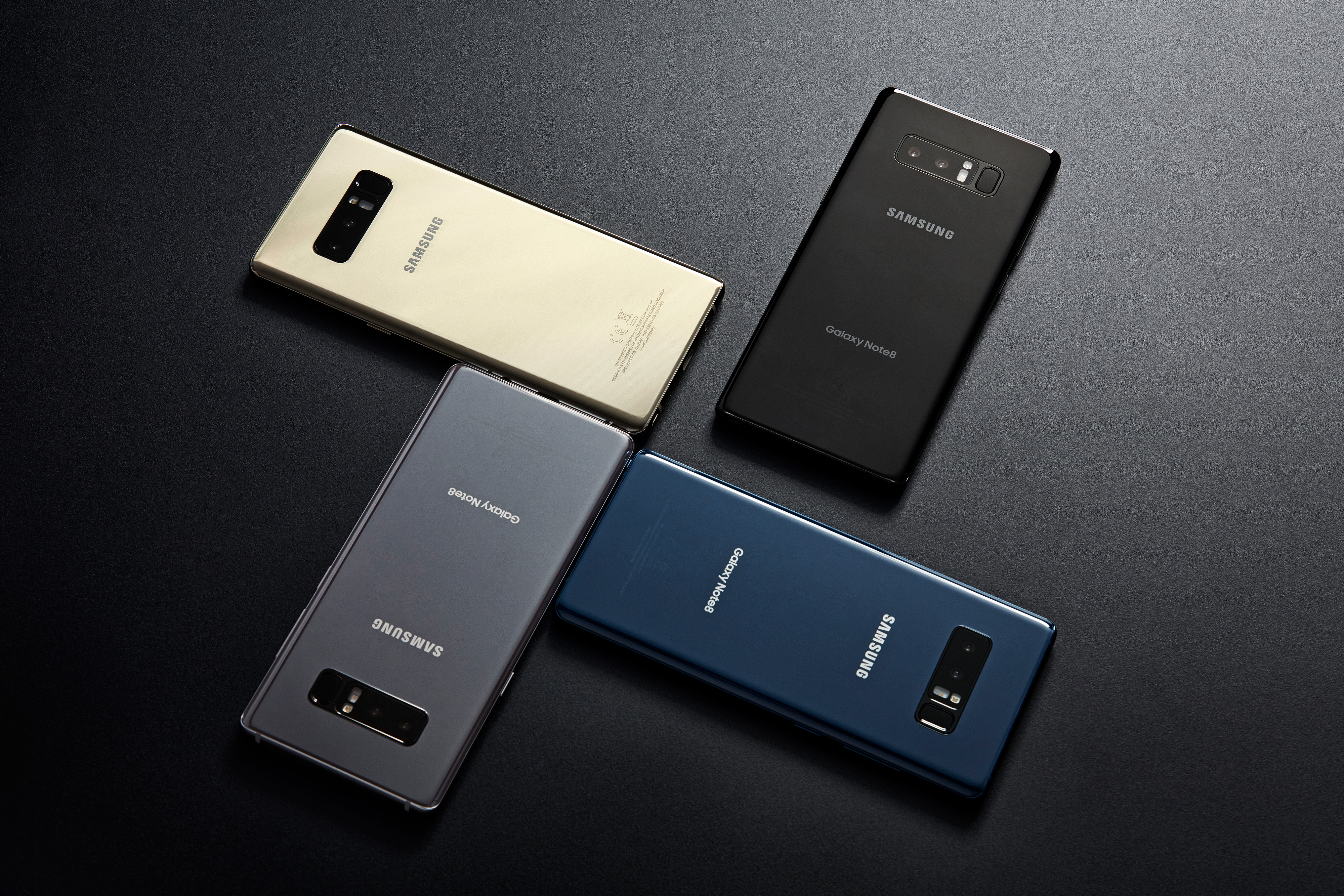
Pre-orders for the Galaxy Note8 will start tomorrow, and carriers will begin stocking it in stores on September 15th. Of particular note here, Samsung is also going to be selling the carrier-unlocked version right out of the gate from their own site, so for customers looking to avoid going through the carriers, it won’t be necessary to wait for the unlocked version. Both the carrier and unlocked versions will come in Orchid Grey and Midnight Black, while the global versions will also include the Maple Gold and Deep Sea Blue colors.
As of press time, Samsung has not announced the price of the phone, though like past Note phones, don’t expect this one to be cheap. Samsung has announced that the unlocked version of the phone will be priced at $929. To sweeten the deal for the next month, Samsung will be running a bundle deal that will offer either a Gear 360 camera or a Galaxy Foundation Kit (128B EVO+ memory card + a fast wireless charger) with the phone.